
Memorial Day Weekend: History, Dates, Traditions & Things to Do

Memorial Day weekend is a meaningful time for Americans to remember the brave military members who gave their lives serving the country. Observed during the last weekend of May, this holiday combines remembrance, gratitude, and time with loved ones. Many families visit cemeteries, attend ceremonies, display American flags, or observe a moment of silence to honor fallen heroes.
Others enjoy barbecues, picnics, road trips, and outdoor activities as summer approaches. Understanding the history and purpose of this holiday makes the celebration more meaningful. Whether you plan a family gathering or a quiet day of reflection, you can honor those who sacrificed their lives while appreciating the freedoms they helped protect.
When Is Memorial Day Weekend 2027? Dates and Calendar
Memorial Day 2027 falls on Monday, May 31. Therefore, the Memorial Day weekend dates are Saturday, May 29, through Monday, May 31. Memorial Day is a U.S. federal holiday observed on the last Monday in May each year. Many government offices, schools, and banks close for the holiday, although schedules vary by location and business. The three-day weekend gives people time to remember fallen service members and spend time with family.
Planning ahead can help you make the most of the long weekend. You might attend a remembrance ceremony on Monday, arrange a Memorial Day weekend picnic on Saturday, or take a short trip with loved ones. If you plan to visit a popular destination, book accommodation early and check local event schedules. Remember that Memorial Day itself falls on Monday, while the full weekend begins on Saturday.
| Day | Date in 2027 | Common plans |
| Saturday | May 29 | Travel, family gatherings, and outdoor activities |
| Sunday | May 30 | Picnics, cookouts, and community events |
| Monday | May 31 | Memorial services and remembrance ceremonies |
What Date Is Memorial Day in 2027?
Memorial Day falls on Monday, May 31, 2027. The date changes each year because the holiday follows a weekday-based rule rather than a fixed calendar date. This arrangement gives Americans a three-day weekend while preserving the holiday’s annual observance. When searching for Memorial Day 2027 plans, check the dates carefully because travel schedules, store hours, and local events may differ from previous years.
When Does Memorial Day Weekend Start and End?
In 2027, Memorial Day weekend starts on Saturday, May 29, and ends on Monday, May 31. Many Americans begin their plans on Friday evening, especially when traveling farther from home. However, Friday is not part of the official three-day weekend. The weekend may include family meals, outdoor recreation, visits to military memorials, and special community ceremonies.
Is Memorial Day Always on the Last Monday in May?
Yes, Memorial Day is observed on the last Monday in May. Congress established this scheduling rule through the Uniform Monday Holiday Act, which moved several federal holidays to Mondays to create more predictable long weekends. The law took effect in 1971 for Memorial Day. Although the calendar date changes, the holiday always falls on a Monday near the end of May.
What Is Memorial Day Weekend and Why Is It Celebrated?
The memorial day weekend observance centers on remembering fallen military members who died while serving the country. Memorial Day honors the men and women who died in military service, including those who lost their lives during wars and military operations. Americans mark the occasion through memorial services, cemetery visits, flag displays, and moments of silence. These acts keep their stories alive and remind future generations that freedom often comes with a heavy cost.
For many families, the weekend also brings a welcome chance to reconnect. People gather for meals, visit parks, attend community events, or prepare for summer. These activities can be part of the holiday, but remembrance should remain at its heart. Understanding the Memorial Day meaning helps you balance celebration with gratitude and respect for those who never returned home.
The Meaning and Purpose of Memorial Day
The purpose of Memorial Day is to honor military personnel who died while serving in the nation’s armed forces. It recognizes their courage and the sacrifices made by those who gave their lives. The holiday also reminds Americans of the families who continue to live with the loss of loved ones. A quiet visit to a memorial or a moment of reflection can express respect just as meaningfully as a public ceremony.
The holiday encourages people to remember individuals rather than viewing them only as names on monuments. A photograph, a letter, or a family story can help bring their experiences into focus. Schools and communities can also teach children why the day matters. These small efforts preserve the meaning of Memorial Day for generations to come.
Explore More: Valentines Day: History, Meaning, Traditions, Symbols & Celebration Ideas
Who Does Memorial Day Honor?
Memorial Day honors service members who died while serving in the United States military. These include people who died in combat and those whose deaths occurred during military service under circumstances covered by the holiday’s commemorative purpose. The day recognizes sacrifices made across generations, from the Civil War to modern military operations. Ceremonies at national cemeteries often include flowers, flags, speeches, and moments of silence.
The holiday also holds deep meaning for military families and loved ones. Parents, spouses, children, siblings, and friends may carry memories of someone who died in service. Their grief does not end when a ceremony finishes or a holiday passes. Offering support, listening to their stories, and respecting their privacy are thoughtful ways to honor their loss.
Why Memorial Day Is More Than the Start of Summer
Many Americans associate Memorial Day weekend with the unofficial start of summer. Warmer temperatures encourage road trips, outdoor dining, swimming, camping, and backyard gatherings. Retailers also promote seasonal sales, while parks and tourist destinations welcome more visitors. These familiar traditions make the long weekend an important part of American life.
Still, the Memorial Day weekend start of summer should not overshadow the reason for the holiday. You can enjoy a family cookout and still pause to remember fallen service members. Consider beginning the day with a ceremony, a moment of silence, or a conversation about someone who served. This simple balance lets you enjoy the weekend while respecting its deeper purpose.
The History of Memorial Day: From Decoration Day to Today
The Memorial Day history reaches back to the years following the American Civil War, when communities began honoring soldiers who had died in battle. People visited burial grounds, placed flowers on graves, and held ceremonies to remember the dead. The holiday was originally known as Decoration Day because families and volunteers decorated soldiers’ graves with flowers and other tributes. These early observances helped establish a lasting American tradition of remembrance.
Over time, the observance expanded beyond Civil War soldiers to include Americans who died in later conflicts. Communities built memorials, organized ceremonies, and developed new ways to honor fallen service members. In 1971, Memorial Day became a federal holiday observed on the last Monday in May under federal law. Today, its history connects generations of Americans through remembrance, gratitude, and respect for those who made the ultimate sacrifice.
How Memorial Day Began After the Civil War
The Civil War caused immense loss of life across the United States. In the years that followed, people sought meaningful ways to remember soldiers who never returned home. Communities organized ceremonies and practiced decorating soldiers’ graves with flowers, wreaths, and flags. Some gatherings also brought families together to care for burial grounds and share memories of those they had lost.
Several towns developed early traditions of honoring fallen soldiers, so historians do not identify one uncontested origin for every Memorial Day custom. On May 5, 1866, Waterloo, New York, held a community-wide observance that later gained national recognition. In 1966, President Lyndon B. Johnson proclaimed Waterloo the birthplace of Memorial Day. This history shows how local acts of remembrance helped shape a national tradition.
Who Started Memorial Day?
Major General John A. Logan, a leader of the Grand Army of the Republic, played a major role in establishing an organized national observance. On May 5, 1868, he issued General Order No. 11, calling for May 30 to become a day for decorating the graves of soldiers who died during the Civil War. The date was chosen because it did not correspond to a major battle, making it suitable for remembrance.
The first widely recognized national observance under Logan’s order took place on May 30, 1868. People decorated graves and attended ceremonies at cemeteries across the country. Although earlier observances had already occurred in several communities, Logan’s order helped spread the tradition. His contribution remains an important part of the story behind modern Memorial Day.
When Did Memorial Day Become a Federal Holiday?
After World War I, Americans increasingly used Memorial Day to honor those who died in all U.S. wars, not only the Civil War. The name gradually replaced Decoration Day in common use, although the older term still appears in historical accounts. Communities continued holding parades, cemetery ceremonies, and memorial services. The holiday became a broader national occasion for honoring military sacrifice.
Congress passed legislation in 1968 that moved Memorial Day to the last Monday in May, with the change taking effect in 1971. This change created a consistent three-day weekend for the holiday. Today, Memorial Day remains both a solemn day of remembrance and a public holiday associated with the arrival of warmer weather. You can explore official holiday information through USA.gov and historical records through the Library of Congress.
Memorial Day vs. Veterans Day: What Is the Difference?
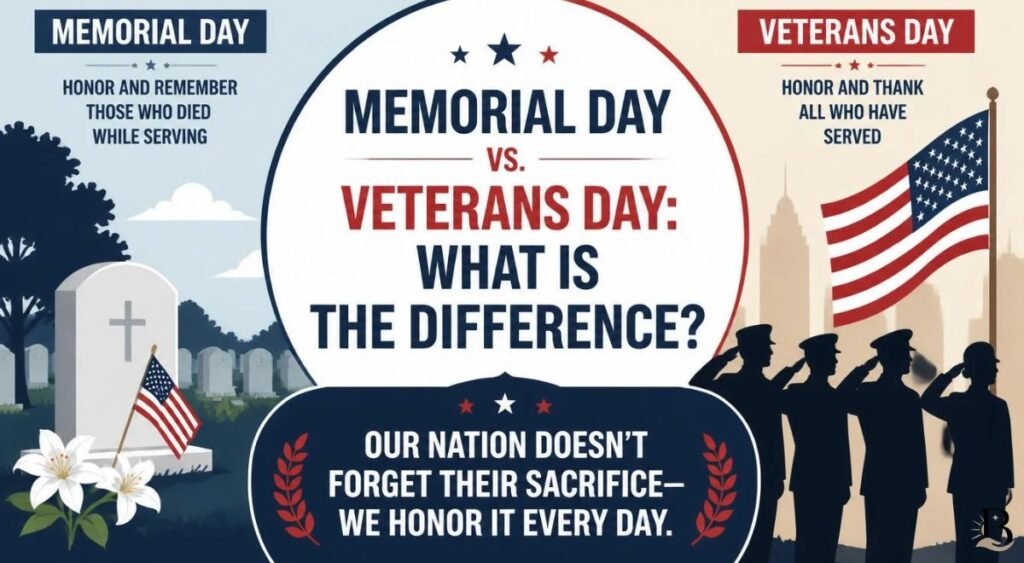
The difference between Memorial Day vs. Veterans Day comes down to whom each holiday honors. Memorial Day remembers military personnel who died while serving their country. Veterans Day, observed every November 11, honors all military veterans who served in the United States Armed Forces, whether during wartime or peacetime. Both holidays recognize military service, but their purposes are not the same.
Understanding this distinction helps people observe each holiday respectfully. On Memorial Day, you might attend a cemetery ceremony or pause to remember someone who died in service. On Veterans Day, you might thank a veteran for their service or attend an event recognizing former service members. Both occasions offer opportunities to learn about military history and support the people and families affected by service.
| Feature | Memorial Day | Veterans Day |
| Date | Last Monday in May | November 11 |
| Main purpose | Honors military personnel who died while serving | Honors all military veterans |
| Common observances | Cemetery visits, memorial ceremonies, moments of silence | Veterans’ events, recognition ceremonies, expressions of thanks |
| Key message | Remembrance and sacrifice | Recognition of military service |
What Memorial Day Honors
Memorial Day honors members of the U.S. military who died while serving their country. Its focus is on the people who made the ultimate sacrifice, including those who died in combat and military service. For many Americans, the day brings personal memories of relatives, friends, and community members who never returned home. Memorial ceremonies help ensure their contributions are not forgotten.
Because of this focus, some veterans may prefer not to receive a general “thank you for your service” on Memorial Day. They may see the occasion primarily as a time to remember their fallen comrades. A sincere expression of remembrance or support for a grieving family can be more fitting. A thoughtful approach recognizes the day’s purpose without diminishing the importance of veterans who are still living.
What Veterans Day Celebrates
Veterans Day honors all people who have served in the U.S. military, including those who served during war and those who served during peacetime. It takes place every year on November 11, regardless of the day of the week. The date is connected to the armistice that ended major hostilities in World War I on November 11, 1918. The holiday was originally known as Armistice Day before becoming Veterans Day in 1954.
Americans often mark Veterans Day through school programs, public ceremonies, parades, and events organized by veterans’ groups. People may express thanks to veterans, listen to their experiences, or support organizations that assist former service members. These activities recognize the commitment and challenges associated with military life. Unlike Memorial Day, Veterans Day includes everyone who served, whether they survived their service or not.
Why Both Holidays Matter to Americans
Memorial Day and Veterans Day preserve different but closely connected parts of America’s military history. One remembers those who died in service, while the other recognizes all who served. Together, they encourage people to understand the human cost of conflict and the experiences of military personnel. They also remind communities that military families often carry responsibilities and emotional burdens long after a deployment ends.
You can honor both holidays through simple, thoughtful actions. Attend a local ceremony, learn about a veteran’s experiences, visit a memorial, or support organizations that help military families. When speaking with others, be mindful that people may have personal connections to military loss or service. Respectful remembrance makes these national observances more meaningful.
Memorial Day Weekend Traditions and Ways to Honor Fallen Heroes
Across the United States, Memorial Day traditions range from solemn cemetery services to community parades and family gatherings. Volunteers may place flags on military graves, while local organizations arrange ceremonies to recognize fallen service members. Many towns also hold concerts, wreath-laying events, and historical programs. These traditions create opportunities for people to learn, remember, and participate in a shared act of respect.
If you want to make your Memorial Day weekend celebrations more meaningful, include a moment of remembrance in your plans. You could visit a memorial, read about a fallen service member, or attend a ceremony in your community. Families can also explain the holiday to children through age-appropriate stories and activities. These small steps help preserve the holiday’s purpose while leaving room for time together.
Visiting Cemeteries and Placing American Flags
Visiting a cemetery is one of the oldest ways to honor fallen military personnel. People may bring flowers, pause at a grave, read a name on a headstone, or reflect quietly on the life represented there. At national cemeteries, volunteers and veterans’ organizations often help prepare for Memorial Day ceremonies. If you wish to participate, contact the cemetery or a local veterans’ group to learn which activities need volunteers.
Placing a small American flag at a grave can be a powerful act of remembrance. Follow cemetery rules and local guidance to ensure flags are placed respectfully and safely. You can also visit a local military memorial if a cemetery trip is not possible. What matters most is the intention to remember the people who died while serving the country.
Attending Memorial Day Parades and Ceremonies
Many communities hold Memorial Day parades and ceremonies featuring veterans’ organizations, military personnel, local officials, and residents. Events may include speeches, wreath-laying, flag displays, music, and moments of silence. Some ceremonies take place at war memorials, town squares, or cemeteries. These gatherings give people a chance to learn about local history and honor those who made the ultimate sacrifice.
Check your city or county website for Memorial Day weekend events, including ceremony times and road closures. Arrive early if you expect a large crowd, and follow instructions from event organizers. If children attend, explain why people may stand quietly or remove their hats during certain parts of the ceremony. Their participation can help build an understanding of remembrance and civic responsibility.
Observing the National Moment of Remembrance at 3 PM
The National Moment of Remembrance invites Americans to pause for one minute at 3 p.m. local time on Memorial Day. The observance encourages people to reflect on the sacrifices made by military personnel who died in service. You can participate wherever you are, whether at home, at a picnic, or while traveling. A brief pause can bring the holiday’s purpose back into focus during a busy day.
You do not need to attend a formal ceremony to take part. You might stop a family activity, turn off music, or quietly reflect on someone who gave their life in service. Parents can explain the moment to children in simple language. This shared pause offers a meaningful reminder that Memorial Day is more than a day off work.
Honoring Military Families and Sharing Stories
The loss of a service member affects an entire family and can shape its life for years. On Memorial Day, consider reaching out to someone who has lost a loved one in military service. A kind message, an invitation to a remembrance event, or a willingness to listen can provide comfort. Avoid assuming that everyone wants to discuss their loss; allow people to decide what feels right for them.
Sharing stories also keeps the memories of fallen service members alive. Families might look through photographs, read letters, or talk about a loved one’s interests and achievements. Communities can preserve these stories through local historical projects and remembrance programs. Such actions recognize each person as an individual, not simply a name on a monument.
Memorial Day Symbols, the Red Poppy, and “In Flanders Fields”
Several symbols help Americans express the meaning of Memorial Day. The American flag represents the nation, while wreaths and flowers often mark graves and memorials. The Memorial Day red poppy has a special connection to remembrance because it grew across battlefields in Europe during and after World War I. These symbols help people express grief, gratitude, and respect when ordinary words may feel inadequate.
Poetry also plays an important role in remembrance traditions. John McCrae, a Canadian physician and soldier, wrote In Flanders Fields after witnessing the devastation of war. His poem helped connect red poppies with the memory of fallen soldiers. Later, Moina Michael promoted the poppy as a lasting symbol of remembrance and wrote We Shall Keep the Faith. Together, these stories show how flowers and poetry can preserve memories across generations.
Why the Red Poppy Is a Symbol of Memorial Day
The red field poppy became a powerful symbol because poppies grew in disturbed soil across parts of Europe during World War I. Their bright red petals stood out against the damaged landscape, creating a lasting image of life amid destruction. The flowers became closely associated with soldiers who died during the war. Wearing a red poppy developed into a way to honor their memory and recognize the cost of conflict.
Moina Michael helped popularize the tradition of wearing poppies in remembrance. Inspired by McCrae’s poem, she pledged to wear a red poppy and encouraged others to do the same. The custom spread to other countries, including Canada and the United Kingdom. Although poppies are associated with different remembrance observances around the world, their message remains clear: remember the fallen and recognize the human cost of war.
The Meaning Behind “In Flanders Fields”
In Flanders Fields describes poppies growing among the graves of soldiers who died in battle. John McCrae wrote the poem in 1915 while serving as a medical officer during World War I. Its powerful images connect the natural beauty of the flowers with the terrible loss caused by war. The poem became one of the best-known works associated with military remembrance.
The poem also explores the responsibility of future generations to remember those who died. Its enduring message has inspired remembrance ceremonies, educational programs, and the wearing of poppies. Moina Michael responded to McCrae’s work with We Shall Keep the Faith, which further strengthened the poppy tradition. Reading these poems can help families understand why remembrance matters and why symbols often carry deep emotional meaning.
The American Flag and Other Memorial Day Symbols
The American flag is one of the most visible symbols during Memorial Day observances. People display it at homes, public buildings, military memorials, and cemeteries to honor the nation and those who served. Memorial Day flag etiquette includes a traditional practice of raising the flag briskly at sunrise, lowering it to American flag half-staff until noon, and then raising it to full staff for the rest of the day. Official guidance and applicable flag protocols should always take priority.
Flowers, wreaths, memorial stones, and engraved names also play an important role. A wreath may represent honor and remembrance, while flowers offer a personal tribute to someone who died. Families sometimes place photographs or handwritten messages at approved memorial sites. These gestures may be simple, but they help make remembrance personal and meaningful.
Best Things to Do on Memorial Day Weekend
There are many Memorial Day activities to enjoy, whether you prefer a busy holiday or a peaceful break at home. You might visit a historical site, attend a local ceremony, take a nature walk, or gather with friends for an outdoor meal. Families can plan activities that suit different ages, interests, and budgets. The best plans allow you to enjoy the long weekend while keeping its meaning in mind.
For many Americans, Memorial Day weekend family activities combine relaxation with time spent outdoors. Parks, beaches, campgrounds, and neighborhood gathering spaces often become popular destinations. You can also choose a quiet activity, such as watching a historical documentary or sharing family stories. No expensive trip is necessary to make the holiday special.
Outdoor Activities, Picnics, and Family Gatherings
A Memorial Day weekend picnic is a simple way to enjoy warmer weather with family and friends. Choose a local park, prepare easy-to-carry food, and bring blankets, water, and sun protection. Outdoor games, nature walks, and cycling can make the gathering enjoyable for different age groups. If you are visiting a public park, check its rules and reservation requirements before leaving home.
A backyard barbecue is another familiar American tradition. Families often prepare burgers, grilled vegetables, salads, and refreshing drinks while children play outside. You can make the gathering more meaningful by beginning with a short moment of remembrance or sharing a story about someone who served. This approach allows everyone to enjoy the day without losing sight of its purpose.
Beach Trips, Camping, and Weekend Getaways
Memorial Day weekend often provides the first convenient opportunity of the year for a beach trip or camping adventure. Popular destinations may include lakes, national parks, coastal towns, and scenic driving routes. Before leaving, check weather conditions, campsite availability, parking rules, and any seasonal restrictions. A little preparation can prevent unnecessary stress during a busy holiday weekend.
If you prefer a longer getaway, build your plans around the activities you enjoy most. Some travelers choose hiking and wildlife viewing, while others prefer small-town attractions or relaxing by the water. Pack appropriate clothing, a first-aid kit, and enough drinking water for your activities. Remember that warmer weather does not eliminate risks such as dehydration, sudden storms, or cold water.
Memorial Day Events, Festivals, and Parades
Local communities often organize ceremonies, historical exhibits, outdoor concerts, festivals, and parades during the holiday weekend. These Memorial Day weekend events may bring together veterans’ groups, musicians, local families, and visitors. Some events focus on remembrance, while others celebrate local culture and the beginning of the summer season. Checking community calendars can help you find activities that match your interests.
Before attending, review the event’s location, start time, parking arrangements, and any entry requirements. Large gatherings may involve road closures or crowded public spaces. Consider choosing at least one event that teaches you something about military history or honors fallen service members. This gives your weekend a meaningful connection to the holiday.
Meaningful Ways to Spend the Long Weekend at Home
You do not need to travel to enjoy a memorable Memorial Day weekend. At home, you can prepare a favorite family meal, watch a historical film, read about a military memorial, or organize old photographs. Parents can help children understand the holiday by discussing courage, service, and the importance of remembering people who died. These activities can create lasting memories without placing pressure on your budget.
Another thoughtful option is to learn about a fallen service member from your town or family history. Read their biography, visit a local memorial, or share their story with relatives. You could also spend a few quiet minutes reflecting on the meaning of sacrifice before starting your day. Sometimes, the simplest plans leave the strongest impression.
Memorial Day Weekend Travel, Safety Tips, and Planning Ideas
Good planning can make Memorial Day weekend travel easier, safer, and more enjoyable. Since many Americans travel during this long weekend, popular highways, airports, beaches, and tourist attractions may become crowded. Booking early, checking weather forecasts, and leaving extra travel time can help you avoid common problems. Before departing, confirm your reservations and make sure your plans fit your budget.
Safety matters just as much as planning. Hot weather, heavy traffic, crowded swimming areas, and outdoor cooking can create risks if you overlook basic precautions. Keep drinking water available, follow local rules, and make sure children have proper supervision near roads and water. With a little preparation, you can enjoy the weekend while leaving room for meaningful remembrance.
Tips for Planning a Memorial Day Weekend Trip
Start planning your trip several weeks ahead if you intend to visit a popular destination. Compare accommodation prices, review cancellation policies, and check whether attractions require advance reservations. Make a simple itinerary that includes travel time, meals, activities, and rest breaks. Avoid packing every hour with plans because a relaxed schedule can make the weekend more enjoyable.
Before leaving home, check your vehicle, pack essential supplies, and share your travel plans with someone you trust. If you are flying, confirm your airline’s schedule and review current airport guidance. Keep important documents and reservation details accessible. Planning these small details in advance can help your holiday run smoothly.
How to Prepare for Busy Roads and Crowded Destinations
Roads can become busier during Memorial Day weekend as families visit relatives and popular holiday destinations. Check traffic reports before leaving and allow extra time for delays. If possible, avoid the busiest travel periods and identify alternate routes. Never use your phone while driving, and arrange a designated driver if alcohol is part of your gathering.
Crowded destinations also require patience and awareness. Choose a meeting point in advance if your group becomes separated, and keep children within sight. At beaches and parks, follow posted rules and respect restricted areas. A flexible attitude can make unexpected delays easier to handle.
Outdoor, Beach, and Barbecue Safety Tips
Warm weather makes outdoor gatherings enjoyable, but basic precautions help prevent injuries and illness. Keep perishable food properly chilled, use separate utensils for raw and cooked meat, and cook food to safe internal temperatures. Place grills outdoors on stable surfaces, away from buildings and overhanging branches. Never leave a hot grill unattended, especially when children or pets are nearby.
At beaches and pools, follow lifeguard instructions and supervise children closely. Use sunscreen, drink water regularly, and seek shade during the hottest part of the day. Campers should check fire restrictions and fully extinguish permitted campfires before leaving. These simple steps help protect everyone throughout the holiday weekend.
How to Plan a Budget-Friendly Holiday Weekend
A memorable holiday does not have to cost a fortune. Visit a free community event, explore a nearby park, organize a potluck meal, or plan a day trip instead of booking an expensive hotel. You can also borrow camping equipment or prepare food at home to reduce costs. Choose activities that suit your family’s interests rather than spending money simply because it is a holiday.
Set a budget before making reservations or shopping for supplies. Compare prices, account for fuel and parking, and leave some money for unexpected expenses. If you plan a barbecue, ask guests to bring a dish or drink. Thoughtful planning lets you enjoy the long weekend without starting summer with unnecessary financial stress.
Explore More: Valentines Day: History, Meaning, Traditions, Symbols & Celebration Ideas
Memorial Day Weekend Sales, Shopping, and Summer Traditions

Retailers across the United States often promote Memorial Day weekend sales on products for homes, gardens, and outdoor living. Shoppers may find offers on furniture, mattresses, appliances, grills, and seasonal clothing. These promotions can make it easier to prepare for summer, but discounts vary by retailer and year. Comparing prices before buying helps you decide whether a sale offers genuine value.
Shopping is only one part of the holiday’s modern traditions. Many Americans spend the weekend outdoors, prepare summer recipes, visit friends, or take their first seasonal trip. These habits help explain why the long weekend feels like a turning point in the calendar. Even so, commercial promotions and summer celebrations should not replace the holiday’s central purpose of remembering fallen military personnel.
What Are Memorial Day Sales?
Memorial Day sales are special promotions that many retailers run around the holiday weekend. Businesses may offer discounts to attract shoppers preparing for summer or making larger household purchases. Some promotions begin several days before Memorial Day and continue through Monday. However, not every store participates, and the size of any discount depends on the product and retailer.
Before purchasing an item, compare its current price with prices from other sellers. Check warranty coverage, delivery charges, return policies, and customer reviews. A large advertised discount does not always mean the product offers the best value. Careful shopping helps you spend wisely instead of buying something you do not need.
Popular Products and Categories on Sale
Common sale categories include mattresses, sofas, kitchen appliances, patio furniture, outdoor grills, and garden equipment. Clothing, home improvement supplies, and seasonal accessories may also appear in holiday promotions. Many of these products help households prepare for outdoor entertaining and warmer weather. If you need something for your home, the holiday may offer a useful opportunity to compare options.
However, make your shopping list before browsing advertisements. Focus on items you already planned to purchase and set a spending limit. Compare specifications, product quality, and total costs rather than choosing an item based only on its advertised savings. This approach helps you enjoy potential bargains without overspending.
Why Memorial Day Weekend Marks the Unofficial Start of Summer
For many Americans, Memorial Day weekend marks the unofficial start of summer. Schools approach their summer breaks, outdoor pools begin welcoming visitors, and families start planning vacations. Warmer temperatures also encourage hiking, camping, gardening, and outdoor dining. These seasonal changes have made the holiday a familiar marker of the transition from spring to summer.
Astronomically, however, summer begins around the summer solstice, usually on June 20 or 21 in the Northern Hemisphere. Meteorological summer begins on June 1, based on the calendar months of June, July, and August. Memorial Day therefore serves as a cultural starting point rather than the official beginning of summer under either definition. The distinction helps explain why people celebrate summer before the season formally begins.
Common Memorial Day Weekend Activities Across America
American holiday traditions vary by region, weather, and family preference. Some people head to coastal destinations, while others visit lakes, national parks, or relatives in nearby towns. Backyard cookouts, outdoor sports, community parades, and family gatherings are common in many places. These activities create opportunities for people to reconnect after busy work and school schedules.
Some communities also hold ceremonies that focus directly on remembrance. Residents may visit monuments, participate in flag-placement programs, or attend local services honoring fallen service members. Families can combine recreation with a meaningful tribute by taking part in a ceremony before their other plans. This balance keeps the holiday enjoyable while preserving its historical significance.
Conclusion
Memorial Day weekend brings Americans together through remembrance, family traditions, outdoor activities, and the arrival of warmer weather. In 2027, the holiday weekend runs from May 29 through May 31, with Memorial Day falling on Monday, May 31. Understanding the holiday’s history, from Decoration Day to today’s national observance, helps explain why it remains such an important part of American life. Whether you attend a ceremony, visit a cemetery, or share a meal with family, you can make the weekend meaningful through thoughtful choices.
As you plan your Memorial Day weekend celebrations, remember the service members who died defending their country and the families who continue to honor their memories. Enjoy the long weekend, explore a new destination, or relax at home with people you love. Take a moment to reflect on the sacrifices behind the holiday and consider how you can preserve their stories. The most meaningful Memorial Day traditions combine gratitude, remembrance, and time spent with the people who matter most.
FAQ’s About Memorial Day Weekend
Is Memorial Day a 3 or 4 day weekend?
Memorial Day weekend is usually a 3-day weekend, running from Saturday through Monday.
What’s Memorial Day Weekend 2026?
Memorial Day weekend 2026 runs from Saturday, May 23, through Monday, May 25. Memorial Day falls on May 25.
Why do we have Memorial Day weekend?
It honors U.S. military personnel who died while serving their country and gives Americans time to remember their sacrifice.
Is May 24, 2026 Memorial Day?
No. Memorial Day 2026 is Monday, May 25; May 24 is Sunday.
Is May 30 a federal holiday?
No. May 30 is not a fixed federal holiday. Memorial Day is a federal holiday observed on the last Monday in May.
Explore More: Valentines Day: History, Meaning, Traditions, Symbols & Celebration Ideas

Welcome to Blessingar! I’m the creator and author, dedicated to sharing accurate, engaging, and informative biographical content for curious readers.






One Comment
Comments are closed.